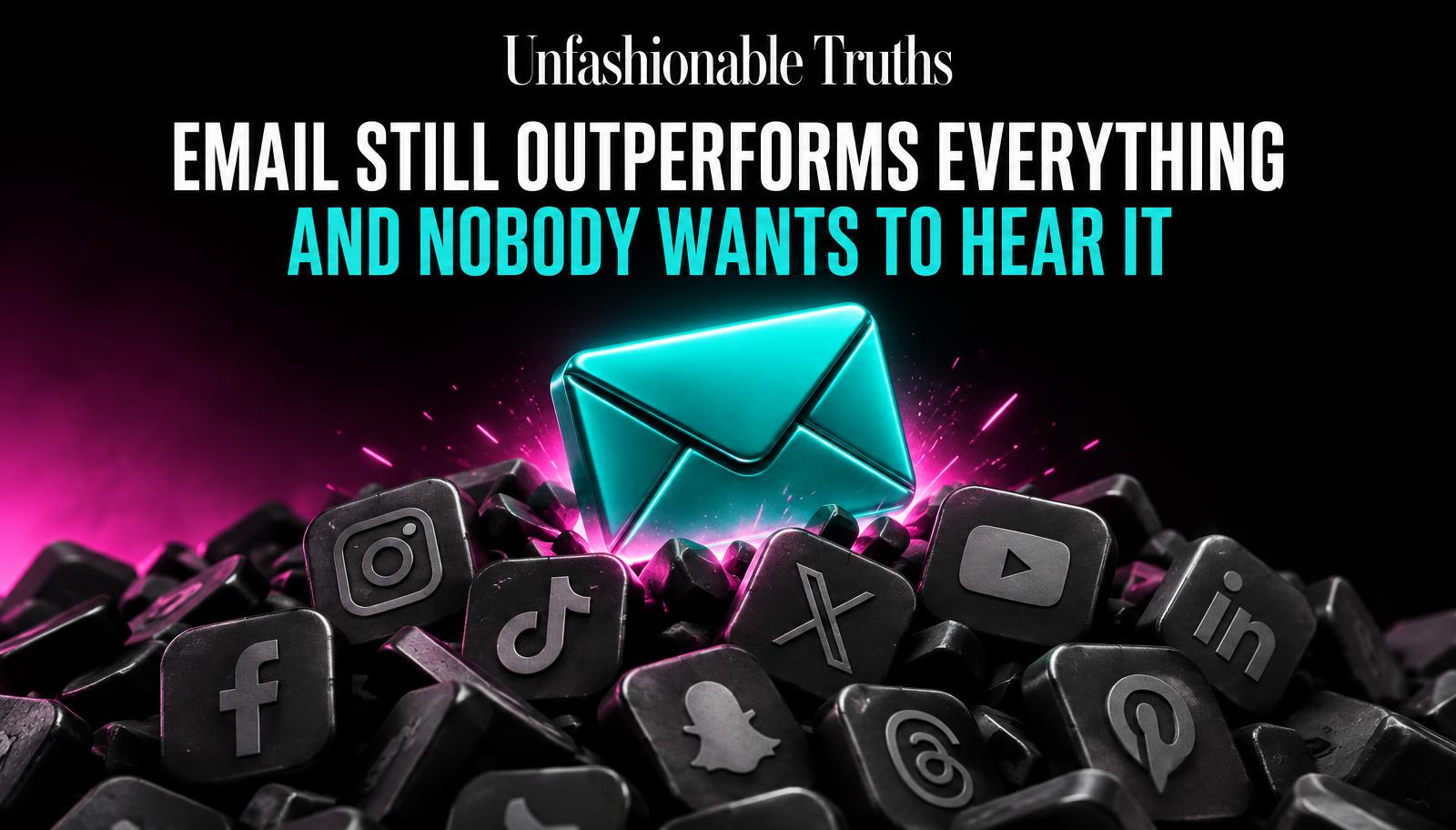
Email Still Outperforms Everything and Nobody Wants to Hear It
A small, owned list of real subscribers routinely earns more than a much larger following on rented social platforms. Here's how to build one and what to send when you have nothing to announce.
A business with 40,000 followers posts an update. A few hundred people see it. Maybe a dozen click through. The rest scrolled past, because a platform algorithm decided their attention belonged somewhere else that day.
A different business with 400 email subscribers sends an update. Most of those 400 get it in their inbox, because that's how email works. A few dozen open it. A handful reply or buy something. On a per-person basis, that second business is running circles around the first.
This isn't a trick or a hack. It's just what happens when you own the relationship instead of renting it.
Every social platform can and does change what it shows people, without asking you. Your email list doesn't work that way. If someone gave you their address, you can reach them, full stop, and that difference compounds over years.
Why the small list wins
A follower is a stranger who agreed to see your posts occasionally, if the platform feels like showing them. A subscriber is someone who handed over their inbox, a much higher bar, and one that filters for people who actually care what you have to say.
That's the whole difference. Followers are wide and shallow. Subscribers are narrow and deep. And deep is where revenue actually comes from, because someone who reads your emails regularly already trusts you before they ever see an offer.
A follower is someone who might see you. A subscriber is someone who gave you permission to show up.
What to send when you have no news
This is where most small businesses get stuck and quietly give up on email: "we don't have anything to announce this month." You don't need news. You need something useful, something personal, or something honest, sent consistently.
| Type of email | What it looks like |
|---|---|
A lesson from a recent job | What went wrong, what you'd do differently, what the client learned |
A behind the scenes note | What the team is working on, in plain, unpolished language |
A short answer to a common question | The thing three customers asked you this month, answered for everyone |
A quick opinion | Your honest take on a trend, tool, or change in your industry |
A simple recap | What shipped, what you learned, what's next, three short paragraphs |
A monthly structure that doesn't require inventing news
Four emails a month, roughly weekly
- Week 1: a useful tip
Something a customer could act on today, related to the problem you solve.
- Week 2: a story
A real job, a real customer situation, told plainly, with a small lesson in it.
- Week 3: a short opinion or observation
Something you noticed in your industry, told in your own voice, not neutral marketing copy.
- Week 4: a light offer or reminder
Only one out of four emails should ask for anything. The rest earn the right to send that one.
Tap a number to check it off.
List building that isn't a popup nobody wanted
A popup demanding an email address the second someone lands on your site is an interruption, and most people close it without reading it. It works a little, which is why it's everywhere, but it's the weakest version of list building available.
A better trade: offer something genuinely useful in exchange for the address, at the moment someone is already interested. A checklist related to the problem they're researching. A short guide. A calculator. A template they'll actually use. The exchange should feel fair, not extracted.
Ask for the email at checkout, at the end of a service, or after a genuinely helpful piece of content, not before someone knows anything about you. And always tell people plainly what they're signing up for: how often you'll email, and about what.
Deliverability basics that keep your list alive
None of this matters if your emails land in spam. A few habits protect deliverability without needing technical expertise: send from a real domain email address, not a free generic one. Keep your list clean by removing addresses that bounce or never open anything after several months. Avoid sudden jumps in sending volume, a list that goes from monthly to daily overnight can trigger spam filters. And never buy a list; a purchased list of strangers who never opted in is the fastest way to damage your sender reputation permanently.
What to actually measure
Open rates used to mean something. Now, with privacy features that auto-open emails in the background, they're one of the least reliable numbers in your dashboard. Chasing a higher open rate is chasing a number that doesn't reflect real attention anymore.
Two numbers matter far more: replies, because someone taking the time to write back is the clearest signal of genuine engagement available, and revenue, because it's the only number that tells you whether the list is actually doing its job. Track which emails lead to a reply, a booking, or a sale, and send more of that kind.
An email list is something you own and can always reach, while a social following depends on a platform's algorithm deciding to show your post to people. A smaller list of genuinely interested subscribers, reached consistently, tends to convert far better per person than a large audience most of whom never see your content.
Send something useful, personal, or honest instead of an announcement: a lesson from a recent job, an answer to a common customer question, or a short opinion on your industry. Consistency in showing up matters more than having a formal update every time.
Offer something genuinely useful in exchange for an email address at a moment someone is already interested, like a helpful guide or checklist, rather than interrupting every visitor immediately. Asking at checkout or after someone has read something helpful also works better than a popup on arrival.
No, open rates have become unreliable because privacy features on many email apps now auto-open messages in the background. Replies and actual revenue generated from an email are much stronger indicators of whether it's genuinely working.